


weating indoors? You’re not alone. Thermal discomfort is only part of the problem. The real sting of poor design is felt in your electricity bill, your health, and even your building’s long-term value. Most Indian homes and offices are built to trap heat instead of blocking it. The result?
- Heavy AC use
- Poor indoor air quality (IAQ)
- Increased urban heat island effect
- Soaring electricity bills
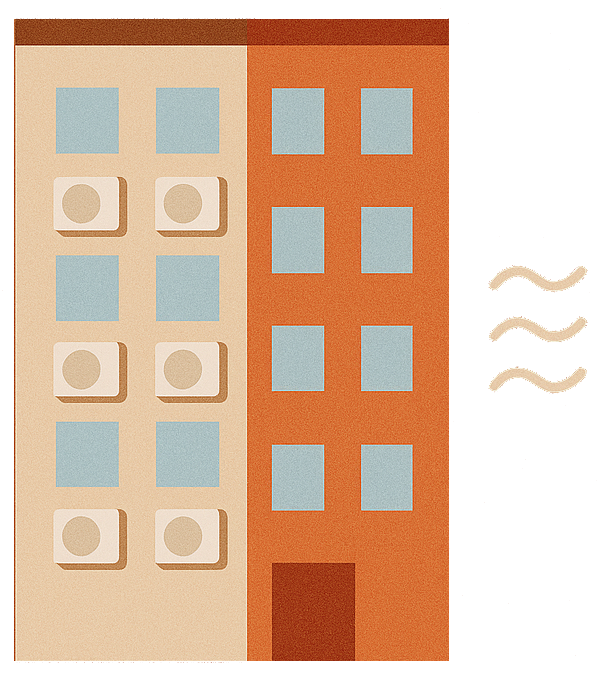
The Hidden Costs of Overheating
Most buildings in Indian cities rely on air-conditioning as a default fix, this patchwork solution leads to:
- Sky-high electricity bills: ACs are energy-hungry, cooling just one poorly-designed room can cost more than running an entire well-designed home. The appliance health also deteriorates with overuse and time which consumes more electricity, leads to faster breakdown and replacement. This adds up to more emissions and a larger carbon footprint.
- Overburdened infrastructure: Cities face peak electricity demand during heatwaves, leading to blackouts and grid failures.
- Increased emissions: More energy = more fossil fuels burned. More Acs running = higher emissions = urban heat islands. It’s a climate feedback loop we can’t afford.
- Decreased asset value: Buildings that overheat age faster, need more maintenance, and are less attractive to buyers or renters who now demand comfort and sustainability.
- Lower indoor productivity: Studies show a direct link between indoor heat and reduced cognitive performance.

The Design Deficit
What’s shocking is: most of this is preventable—at the design stage.
Yet, thermal comfort is rarely factored into early planning. We still chase aesthetics over performance.
Our Approach: Designing to Save Energy (and Money)
At EverBuild Design, we model indoor heat gain and simulate performance before a single brick is laid.
Smart design up front means:
- Glare free natural light
- Smart and Efficient window design
- More cross ventilation
- Fewer ACs needed
- Lower energy costs
- Higher resale/rental value
- Comfortable spaces year-round
All this without sacrificing beauty or function. Next time you see a gleaming glass building baking in the Delhi sun, remember: good design isn’t a luxury. It’s a long-term investment.

Takeaway: Smart design is an investment in health, savings, and the planet.



Leave A Comment